Public Community, Private Signals, and Democratic Trust
Why CJP uses public pages, pseudonymous personalization signals, and clear privacy disclosure to protect democratic trust.
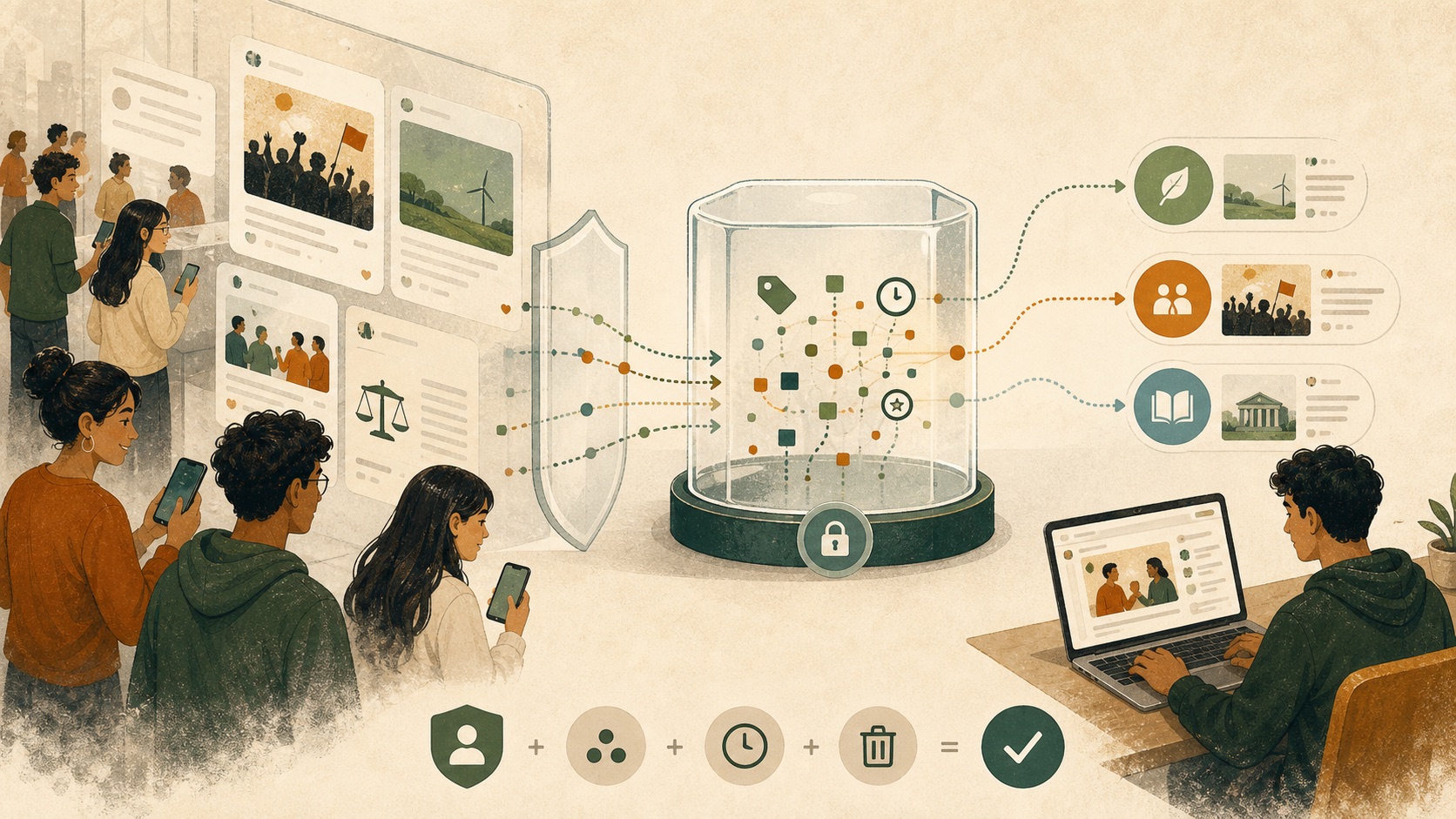
Why signals exist
A public feed is easiest to understand when anyone can read it. Personalization, however, needs some memory of what a visitor seems interested in.
CJP can use pseudonymous signals, such as impressions and interactions, to improve recommendations while keeping the visible product public and easy to browse. The democratic test is whether the user can understand the bargain.
Good personalization is limited
The safest version of personalization is scoped to the product experience, disclosed clearly, and designed with expiry or decay. It should improve relevance without trying to infer everything about a person.
- Use first-party signals for feed quality.
- Keep raw tracking limited and time-bound.
- Let signed-in profiles summarize interests instead of storing everything forever.
Democracy lens
A user should be able to understand why a platform remembers something and what benefit it creates. If the answer is vague, the design needs more restraint.
Movements collapse when people suspect hidden manipulation. CJP’s privacy posture should make personalization feel like public service, not surveillance.
Keep exploring CJP
This blog is connected to the product. Read the public feed for live posts, browse ministries for focused rooms, or check trending discussions when you want the colony pulse.